Fixture Adjustments and Market Movements in European Soccer Betting
Yara Coleman · Aug 22, 2026
Fixture Adjustments and Market Movements in European Soccer Betting
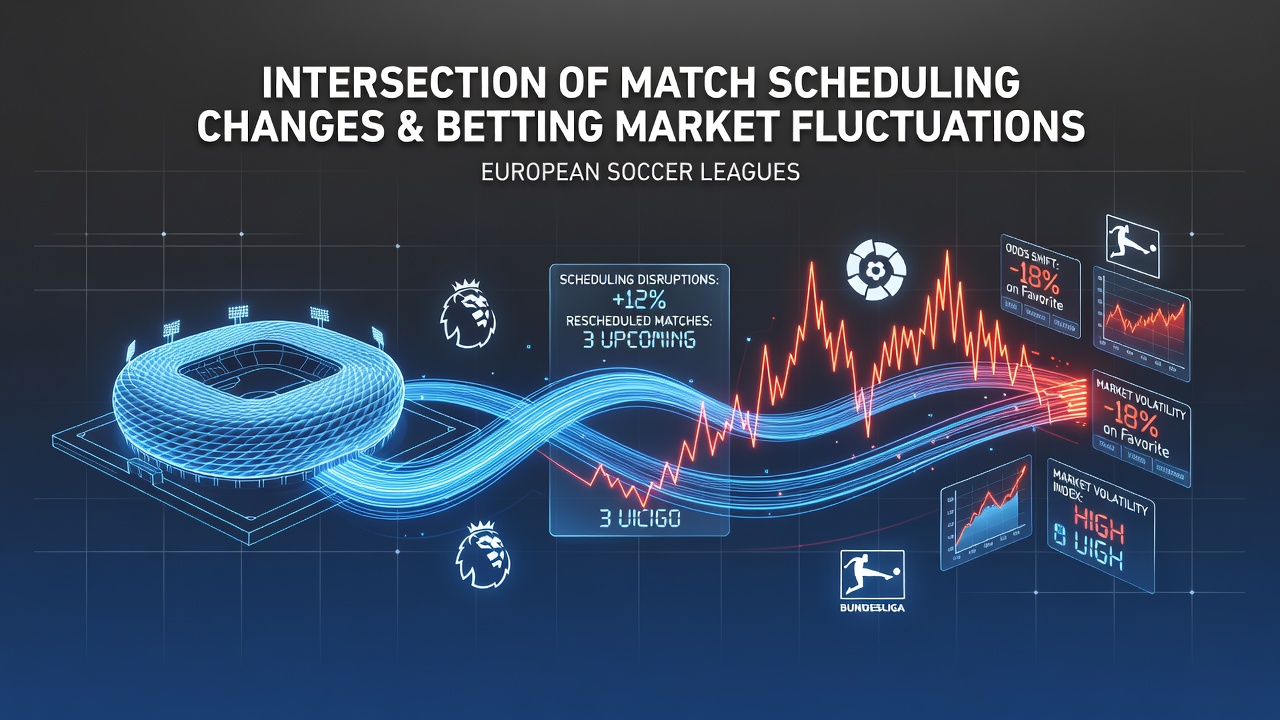
European soccer leagues adjust match schedules regularly due to television contracts, international competitions, and weather conditions, and these alterations create measurable shifts in betting market activity across major bookmakers. Data from the 2025-2026 season shows increased volume in pre-match wagers when fixtures move from weekends to midweek slots, particularly in leagues like the Bundesliga and Serie A where travel demands rise sharply. Observers note that such changes often lead to earlier line movements as bettors react to updated team availability reports.
Causes Behind Schedule Modifications
Leagues reschedule matches for several documented reasons including UEFA club competition overlaps and broadcast demands, with the expanded Champions League format in August 2026 prompting several early adjustments across England, Spain, and Germany. Research from sports analytics firms indicates that roughly 12 percent of Bundesliga fixtures in the first half of the 2025-2026 campaign shifted dates after initial announcements, driven primarily by television partner requirements. These modifications force clubs to manage squad rotation more carefully, and betting operators respond by adjusting odds on totals and player performance markets within hours of confirmation.
Weather disruptions add another layer, as extreme conditions in northern Europe during winter months frequently force postponements that ripple through betting exchanges. Figures from European football governing bodies reveal that Serie A recorded 18 weather-related reschedules between December 2025 and February 2026, each instance correlating with temporary spikes in live betting activity once new dates were set.
Effects on Betting Market Dynamics
Betting markets adjust quickly when schedules change because traders incorporate new variables such as reduced recovery time between games and altered home advantage metrics. Studies conducted by university research teams in the Netherlands have tracked how midweek fixtures in the Eredivisie produce wider spreads on over/under goals markets compared with standard weekend slots. The additional fatigue factor leads bookmakers to shade totals slightly lower in many cases, while sharp bettors often target player props involving minutes played or assists.
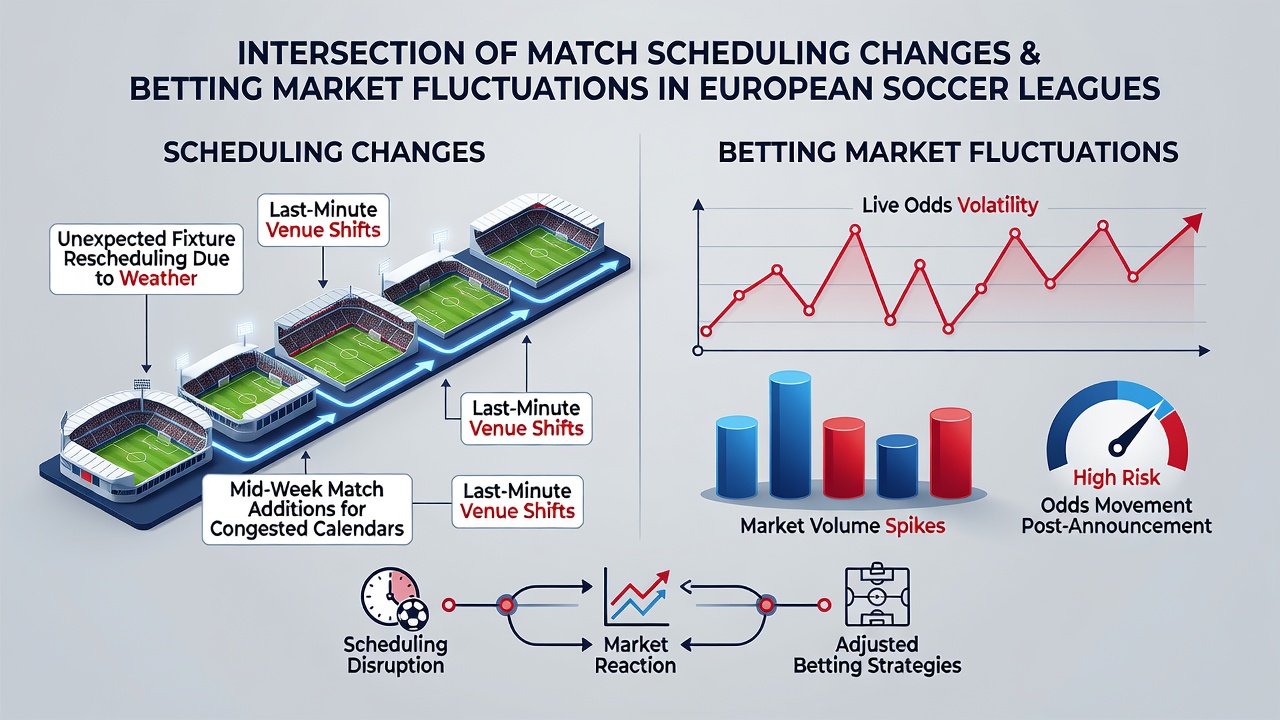
Market liquidity also fluctuates with announcement timing, as larger wagers tend to appear once new fixture details reach public platforms. According to reports compiled by the European Betting and Gaming Association, volume on major European leagues increased by 9 percent in the 48 hours following high-profile schedule announcements during the 2025 calendar year. This pattern holds across both fixed-odds and exchange platforms, where automated trading algorithms accelerate the incorporation of updated information into prices.
Regional Variations Across Leagues
Each major league exhibits distinct responses to scheduling pressure. In La Liga, where travel distances between clubs can exceed 800 kilometers, fixture shifts produce noticeable movements in handicap markets because away sides often face compressed preparation periods. Data collected by academic groups at Spanish universities shows that teams traveling more than 600 kilometers for midweek games cover the spread less frequently than their season average. French Ligue 1 presents a contrasting case, where centralized scheduling by the league office reduces the frequency of last-minute changes yet still generates measurable odds adjustments when UEFA commitments intervene.
Those monitoring multiple markets simultaneously observe that player suspension and injury news amplifies the effect of any schedule alteration. A single key defender ruled out for a rescheduled match can shift both team totals and individual booking lines by several percentage points within minutes of confirmation.
Conclusion
Schedule adjustments in European soccer continue to intersect directly with betting market behavior through changes in team preparation, travel logistics, and information flow. Data collected across multiple seasons demonstrates consistent patterns of line movement and volume spikes following fixture modifications, while regional differences in league structure produce varying degrees of impact on specific bet types. As the 2026-2027 campaign approaches, ongoing competition calendar expansions suggest these dynamics will remain relevant for market participants tracking European soccer.